
Unlocking Organizational Success: How OD, HR, L&D, CM, & TM Synergies Drive Growth
Introduction:
The Evolution of HR in a Dynamic Workplace
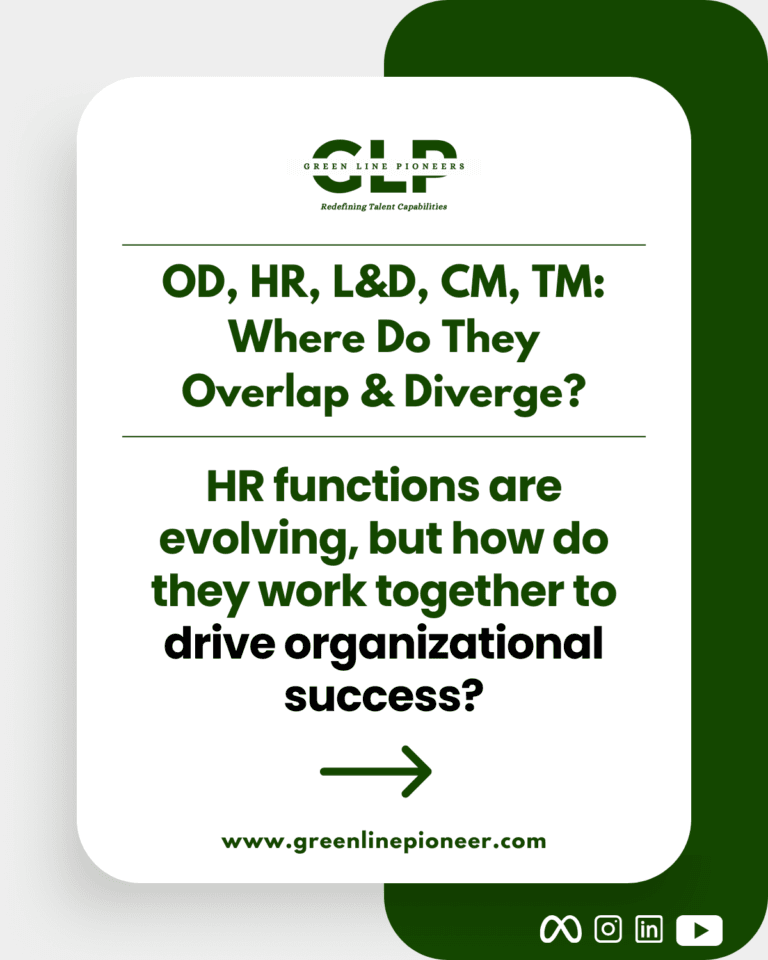
Human Resources (HR) has transcended its traditional role of payroll and compliance. In today’s fast-paced business environment, functions like Organizational Development (OD), Change Management (CM), Talent Management (TM), and Learning & Development (L&D) are critical to fostering agility, innovation, and employee satisfaction.
But how do these disciplines intersect, and why does their integration matter? This blog breaks down their unique roles, shared synergies, and data-backed strategies to help organizations thrive.
Core Functions Demystified – Roles, Metrics & Examples
Each HR sub-function addresses distinct challenges. Here’s how they contribute to organizational success:
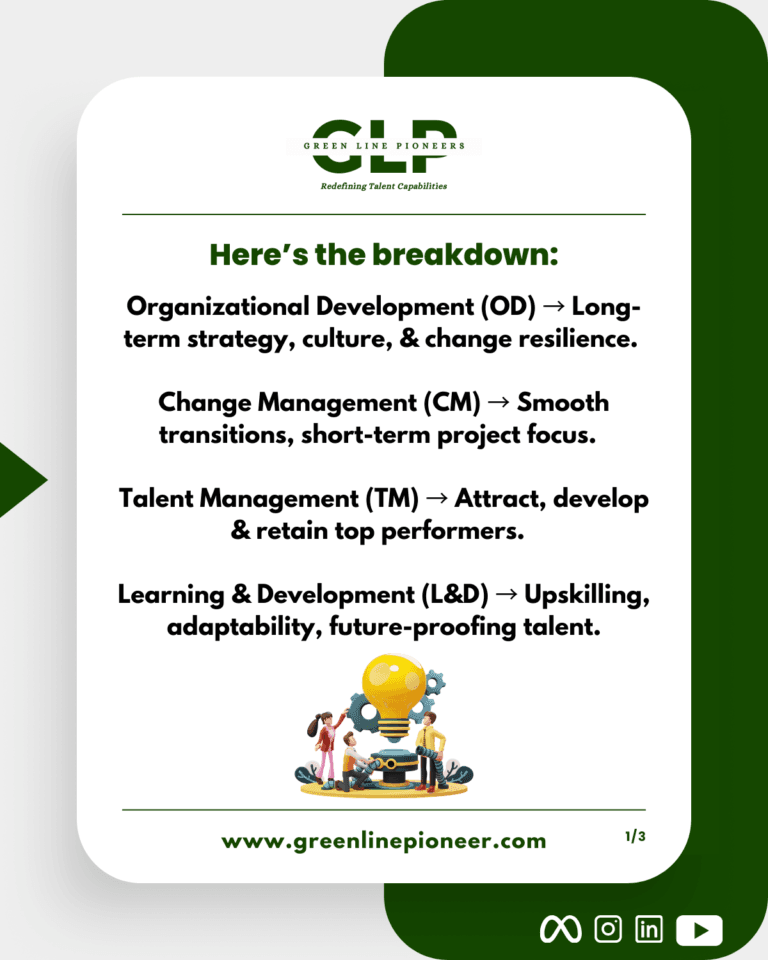
- Organizational Development (OD)
- Focus:Long-term structural and cultural health.
- Key Metrics:Employee well-being scores, change success rates, culture audit results.
- Example:A global retail chain used OD strategies to redesign hybrid workflows post-pandemic, improving productivity by 22% (McKinsey).
- Change Management (CM)
- Focus:Minimizing disruption during transitions.
- Key Metrics:Adoption rates (e.g., 85% CRM rollout compliance), project ROI.
- Example:A tech firm reduced ERP implementation resistance by 40% through CM-driven communication plans (Prosci).
- Talent Management (TM)
- Focus:Attracting, developing, and retaining top performers.
- Key Metrics:Turnover rates (industry avg: 10.6% SHRM), time-to-promotion.
- Example:A Fortune 500 company slashed leadership vacancy periods by 60% via proactive succession planning.
- Learning & Development (L&D)
- Focus:Closing skill gaps and fostering adaptability.
- Key Metrics:Training ROI (companies with robust L&D see 24% higher profits – LinkedIn), course completion rates.
Example: Upskilling 1,000 employees in AI tools led to a 15% revenue boost for a logistics firm (Deloitte).
Synergies in Action – Where Collaboration Drives Impact
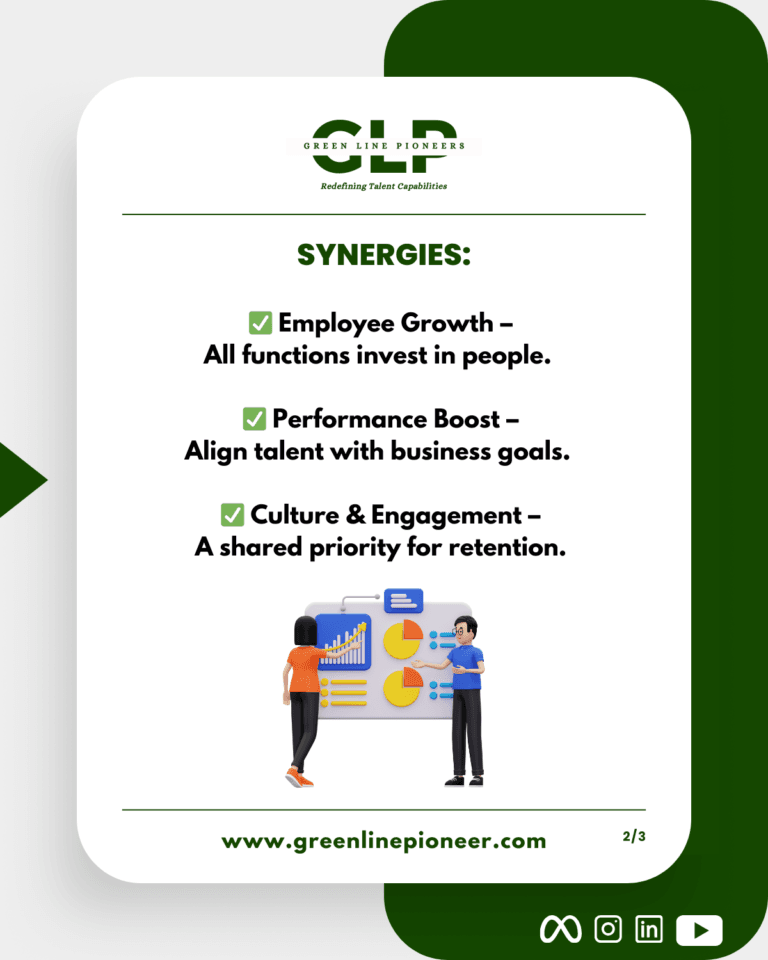
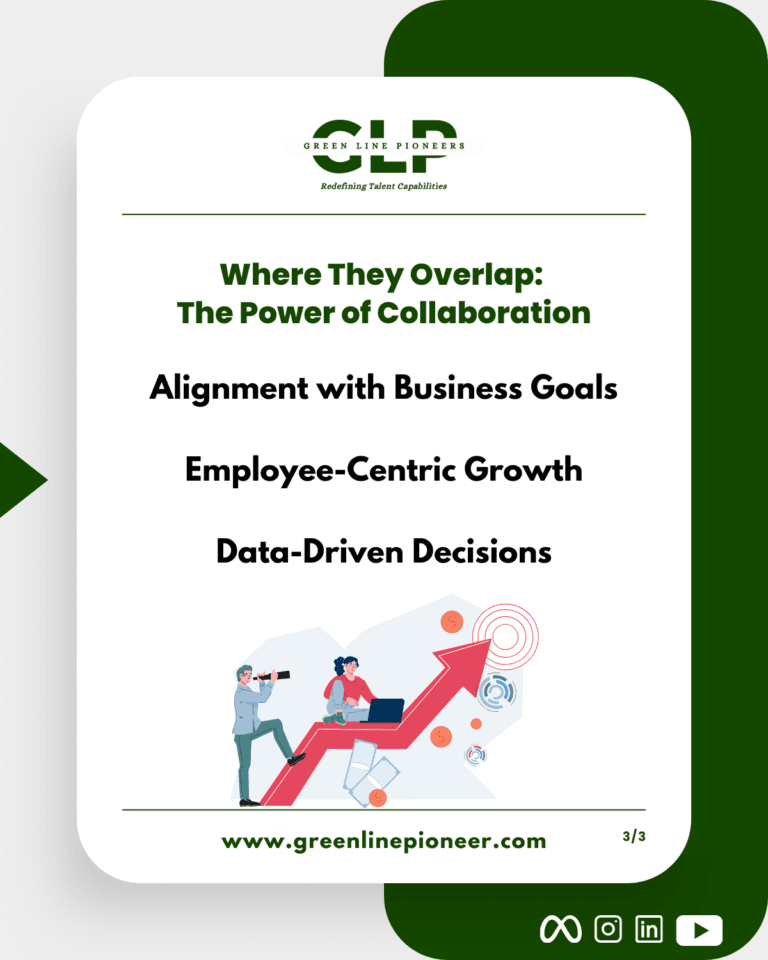
While these functions operate independently, their overlap creates transformative outcomes:
- Shared Alignment with Business Goals
All four ensure human capital strategies ladder up to organizational objectives. For instance:
- OD aligns culture with mergers.
- TM builds pipelines for strategic growth markets.
Stat: Organizations aligning L&D with business goals are 3x more likely to report revenue growth (BCG).
- Employee-Centric Growth
- OD + L&D:Redesigning workflows while upskilling teams (e.g., reskilling manufacturing workers for automation).
- TM + CM:Retaining talent during restructuring via personalized career paths.
Stat: Companies prioritizing employee experience are 4.4x more likely to retain top talent (Gallup).
- Data-Driven Decision-Making
Combining metrics paints a holistic picture:
- High turnover (TM) + low training ROI (L&D) = need for upskilling programs.
Poor change adoption (CM) + low well-being scores (OD) = insufficient change communication.
Bridging the Gaps – 4 Steps to Integrate HR Functions
Siloed HR teams limit potential. Here’s how leaders can foster collaboration:
Step 1: Audit Existing Processes
- Identify overlaps (e.g., duplicate leadership training in TM and L&D).
- Use surveys to uncover gaps in employee support during changes.
Step 2: Launch Cross-Functional Initiatives
- Example:Combine CM and L&D to pre-train employees before a digital transformation.
- Case Study:A healthcare provider merged OD and TM teams to reduce post-merger turnover by 30%.
Step 3: Adopt Unified Metrics
Track combined KPIs like:
- Change Readiness Score(CM + OD).
- Retention Linked to Development(TM + L&D).
Step 4: Invest in HR Tech
Tools like Workday or SAP SuccessFactors centralize data, enabling real-time insights across functions.
The Future of HR – Integration as a Competitive Advantage
Organizations that unify HR functions will dominate in:
- Agility:Rapidly adapting to market shifts (e.g., AI adoption).
- Employee Retention:Gartner reports 34% higher retention when OD and TM collaborate.
- Innovation:Cross-functional teams drive 20% more creative solutions (Harvard Business Review).
Emerging Trends to Watch:
- AI-powered talent analytics.
- Personalized learning pathways.
- Proactive change resilience programs.
Conclusion: Break Silos, Build Synergies
The future belongs to organizations that treat OD, HR, L&D, CM, and TM as interconnected pillars. By auditing processes, fostering collaboration, and leveraging data, leaders can unlock unprecedented growth.
Your Next Steps:
- Assess:Which function is your organization neglecting?
- Act:Start with a pilot project (e.g., L&D-driven change training).
- Optimize:Measure outcomes and iterate.

Green Line Pioneers
Redefining Talent Capabilities
Explore us on Social Media