
Building a Future-Ready Workforce: The Essential Guide to Employee Training and Development in the UAE
In today’s dynamic business landscape across the UAE, from the bustling hubs of Dubai to the innovative centers of Abu Dhabi, a company’s greatest asset is its people. However, having a team is not enough; nurturing their growth is what separates leading organizations from the rest. A strategic focus on employee training and development is no longer a luxury but a critical necessity for businesses aiming to ensure long-term success, adaptability, and competitive advantage.

This guide explores the importance, methods, and measurable benefits of implementing effective employee development strategies, specifically tailored for the unique market in the United Arab Emirates.
Why Investing in Your Employees is the Smartest Business Decision
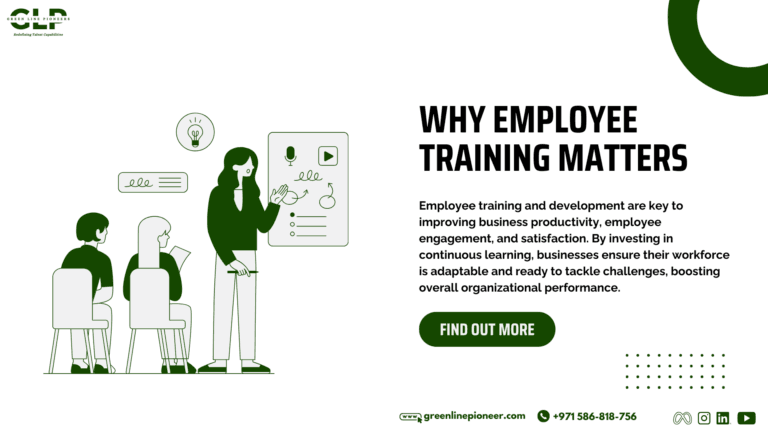
At its core, employee training and development is about more than just mandatory seminars. It is a continuous commitment to improving business productivity, increasing employee engagement, and boosting job satisfaction. For UAE-based companies, this investment ensures your workforce can adeptly navigate regional market shifts, technological advancements, and evolving customer expectations, directly contributing to superior organizational performance.
Tangible Benefits of a Trained Workforce
The return on a robust training program is clear and multi-faceted:
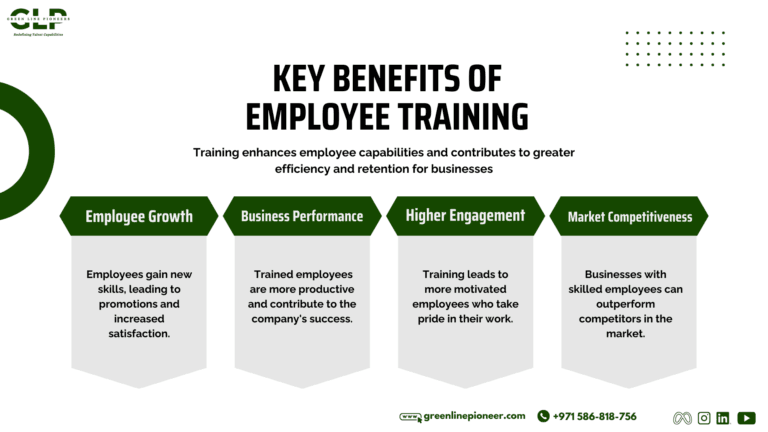
- For Employee Growth: Staff acquire new competencies, paving the way for career advancement and greater personal fulfillment.
- For Business Performance: Skilled employees work more efficiently, drive innovation, and directly enhance the company’s bottom line.
- For Higher Engagement: Employees who feel invested in are more motivated, take greater pride in their work, and demonstrate stronger loyalty.
- For Market Competitiveness: In a diverse and fast-paced market like the UAE, a highly skilled team is a definitive advantage, allowing businesses to outperform rivals.
Key Training Options for a Comprehensive Strategy
A one-size-fits-all approach rarely works. Effective employee training programs in Dubai and the wider UAE should encompass a variety of formats to address different needs:
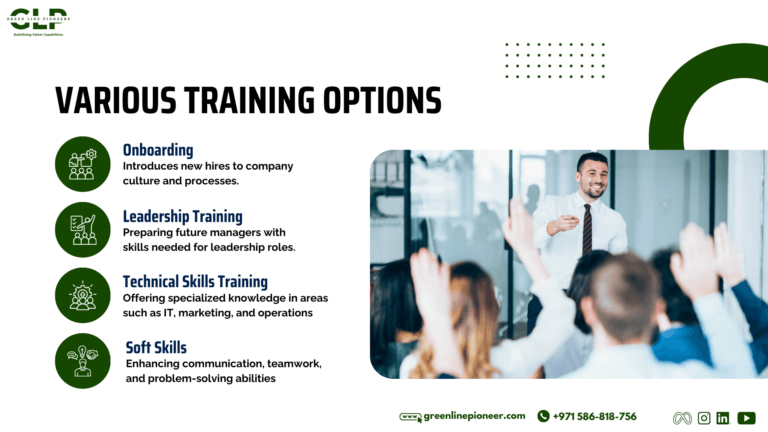
- Onboarding: Properly integrating new hires into the company culture and processes.
- Leadership Development: Equipping potential managers with the essential skills for future roles.
- Technical Skills Training: Providing specialized, up-to-date knowledge in fields like IT, digital marketing, and operations.
- Soft Skills Enhancement: Fostering critical interpersonal abilities such as communication, teamwork, and problem-solving.
Fostering Career Development to Retain Top Talent
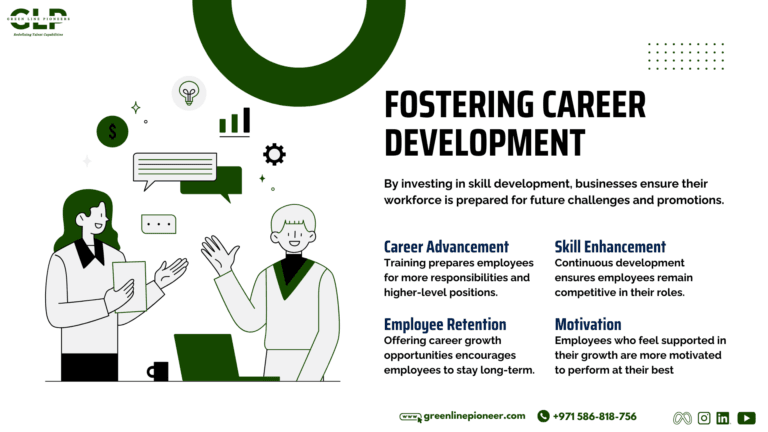
A clear path for growth is a powerful retention tool. By prioritizing skill development, businesses show employees a commitment to their future, preparing them for upcoming challenges and promotions. This leads to higher employee retention, reduced turnover costs, and a more motivated, capable workforce ready to take on greater responsibilities.
Effective Training Approaches for Modern Learners
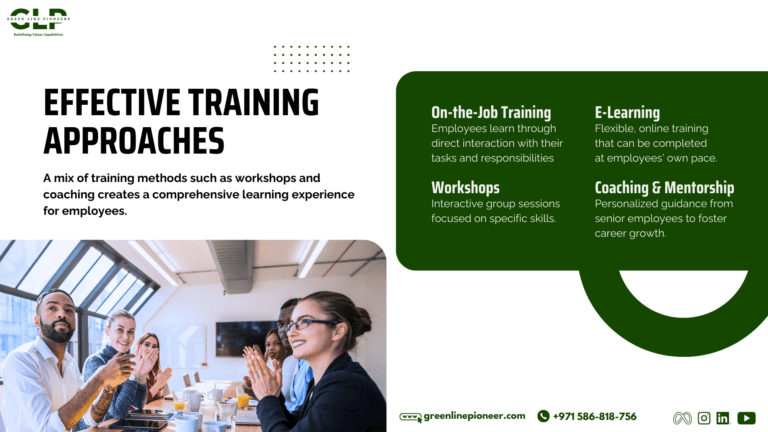
Modern employee training and development utilizes a blended mix of methods to create a comprehensive learning experience:
- On-the-Job Training: Learning through direct, practical experience.
- Interactive Workshops: Group sessions focused on building specific skills.
- E-Learning Platforms: Flexible, online modules that allow for self-paced learning.
- Coaching and Mentorship: Personalized guidance from experienced leaders to foster individual career growth.
Measuring Success: Evaluating Training Effectiveness
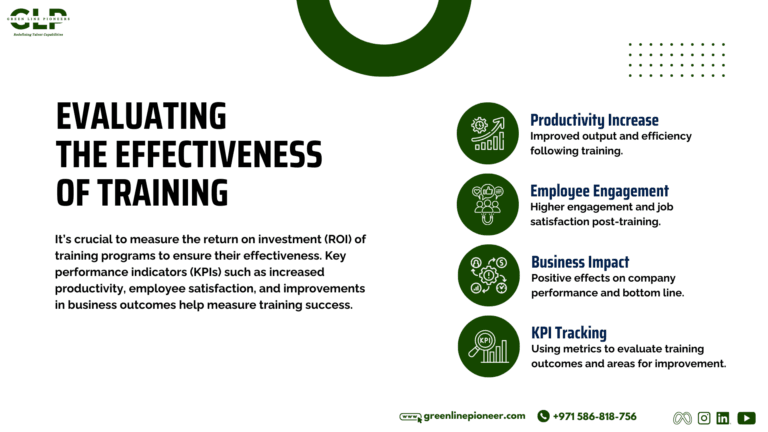
To ensure your investment delivers value, it is crucial to measure outcomes. Key Performance Indicators (KPIs) such as rises in productivity, improvements in employee satisfaction scores, and positive shifts in business metrics help quantify the return on investment (ROI) of training. Regular evaluation identifies strengths and areas for improvement, ensuring programs remain relevant and impactful.
Building a Sustainable Learning Culture
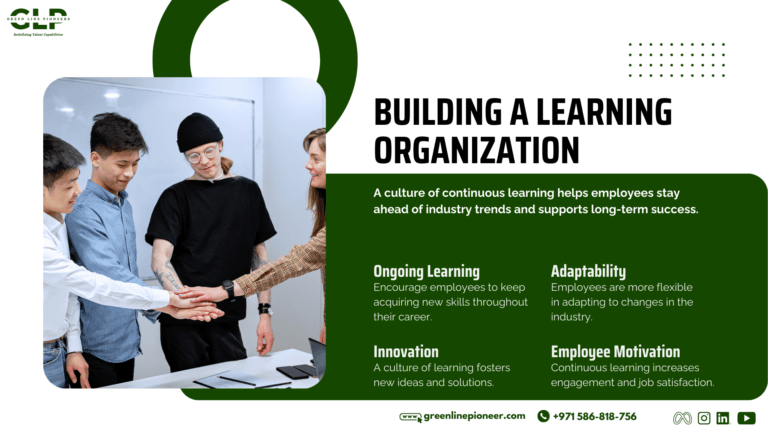
The ultimate goal is to evolve into a learning organization. This means cultivating a culture where continuous learning is valued and encouraged. Such an environment helps employees stay ahead of industry trends, fosters innovation through new ideas, and builds an adaptable, resilient, and motivated workforce prepared for the future.
Overcoming Common Training Barriers in the UAE
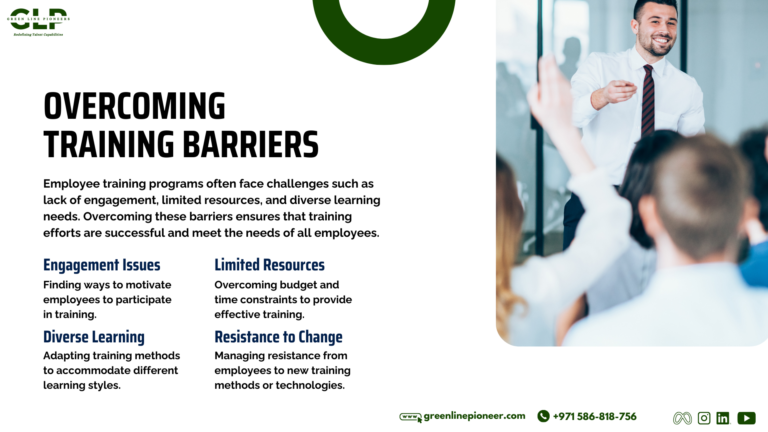
Implementing training initiatives can face hurdles such as lack of engagement, budget constraints, diverse learning styles, and resistance to new methods. Success lies in proactively addressing these challenges—creating compelling content, optimizing resources, personalizing delivery, and managing change effectively—to ensure training meets the needs of all employees.
Conclusion
In the competitive UAE market, building a skilled, agile, and engaged workforce is the cornerstone of sustainable success. A strategic, well-executed approach to employee training and development is the most effective way to achieve this.
At Green Line Pioneers, we specialize in redefining talent capabilities. We partner with UAE businesses to design and implement tailored employee development strategies that drive real growth and measurable results.

Frequently Asked Questions (FAQs): Employee Training in the UAE
A: Demand is high for leadership development, digital transformation skills (like AI and data analytics), advanced technical trade certifications, and core soft skills such as cross-cultural communication and adaptive leadership, which are vital in the UAE’s diverse workplace.
A: Focus on cost-effective methods like curated e-learning platforms, internal peer-to-peer workshops, and phased training programs. Prioritizing training that addresses an immediate business need can also maximize ROI, even with constrained resources.
A: Success is measured through a combination of metrics: pre- and post-training skill assessments, tracking productivity and quality of work, monitoring employee engagement and retention rates, and directly linking training to improvements in specific business KPIs.
A: Effective strategies include offering training materials in multiple languages, using visual and practical learning tools that transcend language barriers, and ensuring trainers are culturally aware. Programs should emphasize inclusive communication and teamwork.
A: Resistance often stems from fear of change, perceived irrelevance, or time pressures. Management can overcome this by clearly communicating the personal and professional benefits, involving employees in program selection, and integrating training smoothly into the workflow without overburdening staff.
A: Begin by securing leadership buy-in and commitment. Then, conduct a skills gap analysis to identify key needs. Start with small, high-impact pilot programs, celebrate learning achievements publicly, and integrate learning goals into personal development plans to make growth a core company value.

Green Line Pioneers
Redefining Talent Capabilities
Explore us on Social Media