
Recruitment ROI: How to Calculate, Communicate & Justify Your Hiring Investment
In today’s hyper-competitive talent landscape, the stakes for getting hiring right have never been higher. Your people are undeniably your organization’s greatest asset, yet they also represent its single largest cost center. Strategic recruitment isn’t just about filling seats; it’s the engine driving sustainable business growth. This guide dives deep into how to calculate recruitment ROI and, crucially, how to communicate its value to secure the investment your talent strategy deserves.
Why Measuring Recruitment ROI is Non-Negotiable (More Than Ever!)
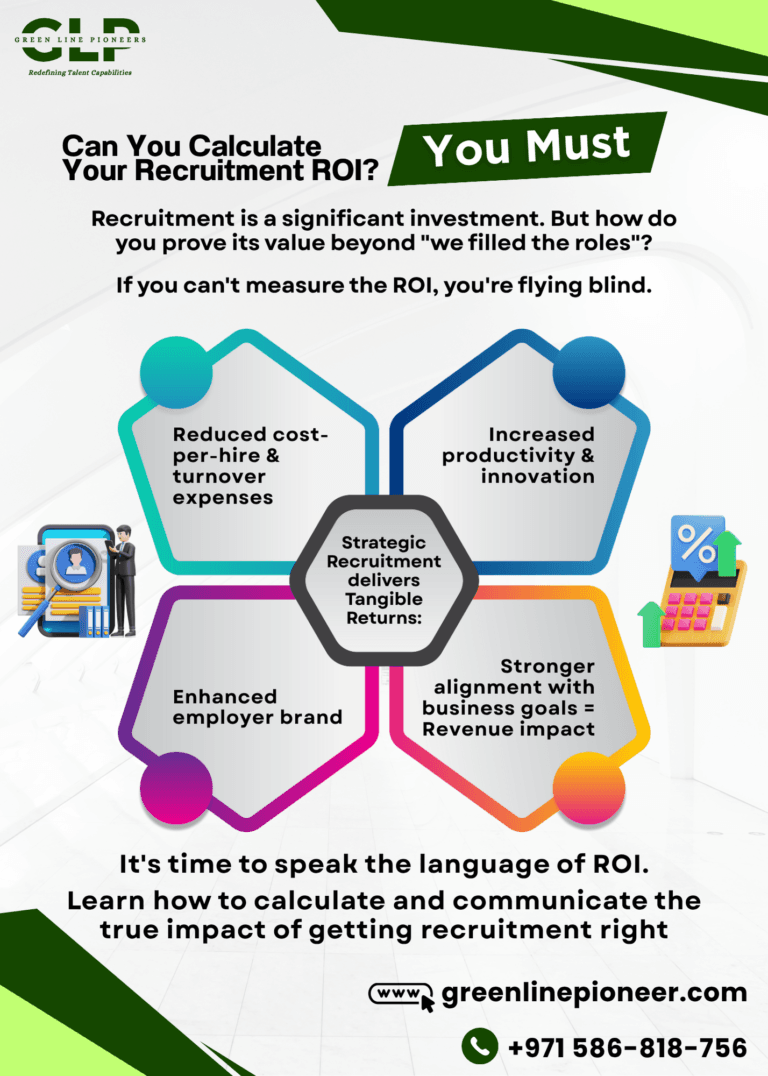
Gone are the days when recruitment was viewed purely as an administrative back-office function. Effective recruitment is a core strategic lever because it directly impacts:
- Cultural Alignment & Mission Drive:Hiring individuals who resonate with your company’s DNA fosters engagement, collaboration, and innovation.
- Accelerated Business Performance:Placing the right skills in the right roles boosts productivity, quality, customer satisfaction, and ultimately, revenue.
- Cost Containment & Efficiency:Minimizing costly turnover and the expenses associated with rehiring (advertising, interviewing, onboarding, lost productivity) significantly impacts the bottom line.
Treating recruitment as a tactical cost center is a missed opportunity. To secure budget for advanced tools, employer branding initiatives, or specialized agency support, you need hard evidence. That evidence is Recruitment Return on Investment (ROI).
Demystifying the Recruitment ROI Calculation
At its core, ROI measures the gain (or loss) generated relative to the amount invested. For recruitment, the formula is straightforward:
Recruitment ROI (%) = [(Monetary Value of Benefits – Total Recruitment Costs) / Total Recruitment Costs] x 100
The challenge lies in accurately defining the components:
Monetary Value of Benefits (The Gains): This requires translating recruitment successes into tangible financial value. Key sources include:
- Increased Revenue/Profit per Hire:Estimate the contribution of a high-performing hire vs. an average one.
- Reduced Cost of Vacancy:Calculate the lost productivity and potential revenue while a role remains unfilled. Shortening Time-to-Fill directly reduces this cost.
- Reduced Turnover Costs:Factor in separation costs, replacement costs (hiring), and lost productivity during the transition for hires who leave prematurely. Improving retention saves real money. (Studies often peg the cost of replacing an employee at 50-200% of their annual salary).
- Improved Productivity:Quantify the faster ramp-up time or higher output of better-matched hires.
- Savings from Reduced Agency Fees: If internal efforts or direct sourcing reduce reliance on expensive agencies.
Total Recruitment Costs (The Investment): Capture all expenses associated with the hiring process for the roles/period you’re measuring:
- Job advertising spend (job boards, social media ads)
- Recruitment agency or search firm fees
- Salaries & benefits of internal recruiters and talent acquisition team
- Cost of Applicant Tracking System (ATS) and other HR tech (assessment tools, video interviewing)
- Background check fees
- Interview expenses (travel, time of interviewers)
- Onboarding program costs
- Referral bonus payouts
Example Calculation:
Imagine you invested $50,000 in a new recruitment marketing campaign and an assessment tool for a specific department. Over the next year, hires attributed to this initiative resulted in:
- Estimated productivity gains worth: $80,000
- Reduced turnover costs (due to better fit): $30,000
- Reduced agency fees (hired more directly): $20,000
Total Benefits = $130,000
Total Costs = $50,000
ROI = [($130,000 – $50,000) / $50,000] x 100 = ($80,000 / $50,000) x 100 = 160%
This means for every $1 invested, the company gained $1.60 in return (plus the original $1 back).
Essential Recruitment Metrics that Feed into ROI
Calculating the full ROI often requires tracking foundational metrics consistently:
- Cost per Hire (CPH):Total Recruitment Costs / Number of Hires – The fundamental efficiency metric. Track trends over time and benchmark against industry standards.
- Time to Fill (TTF):Average number of days from job opening approval to candidate acceptance – Directly impacts Cost of Vacancy. Faster fills mean less lost productivity.
- Quality of Hire (QoH):The most critical, yet trickiest metric. Combine:
- Performance:Manager ratings, achievement of first-year goals.
- Retention:% still employed at 6 months, 1 year, 2 years.
- Cultural Fit:Survey data from managers and peers.
- Engagement Scores:New hire survey results (e.g., eNPS).
- First-Year Turnover Rate:(Number of hires who left within 12 months / Total number of hires) x 100 – High early turnover is a major red flag and cost driver.
- Hiring Manager Satisfaction:Measured via post-hire surveys. High satisfaction often correlates with better QoH and smoother processes.
- Source of Hire:Tracks which channels (job boards, referrals, career site, agencies) yield the best QoH and lowest CPH.
- Offer Acceptance Rate: (Number of offers accepted / Number of offers extended) x 100 – Indicates competitiveness and effectiveness of the offer stage.
Beyond the Calculation: How to Communicate Recruitment ROI Effectively
Calculating ROI is only half the battle. Communicating it compellingly to executives and finance stakeholders is key to securing buy-in and investment:
- Speak Their Language ($$$):Frame everything in financial and business impact terms. Connect reduced TTF to recovered revenue, improved QoH to higher team output, lower turnover to direct cost savings.
- Link to Strategic Goals:Explicitly show how recruitment efforts support overarching company objectives (e.g., entering new markets, launching new products, improving customer satisfaction scores).
- Use Clear Visuals:Dashboards, charts, and graphs are far more impactful than dense spreadsheets. Show trends over time. Visualization Idea: A simple chart showing Recruitment Investment vs. Calculated ROI/Reduced Turnover Costs over quarters.
- Tell the Story with Data:Don’t just present numbers. Explain the “why” behind trends. “Our investment in employer branding reduced our Cost per Hire by 15% and increased our Offer Acceptance Rate by 20% by strengthening our candidate pipeline quality.”
- Focus on “Quality” Impact:Emphasize how investments (e.g., in better assessments or interview training) lead to higher Quality of Hire, which is the ultimate driver of long-term ROI. Connect QoH to performance metrics if possible.
- Benchmark (Carefully):Use industry data (like SHRM or LinkedIn Talent Solutions reports) to provide context, but explain why your specific situation or goals might differ.
- Be Transparent & Realistic:Acknowledge assumptions made in calculations (especially for benefit valuation). Show both successes and areas for improvement. This builds credibility.
- Tailor the Message:Adjust the depth and focus based on your audience. The CFO needs the hard financials, the CEO wants the strategic link, and hiring managers appreciate efficiency and quality gains.
- Proactive Reporting: Don’t wait for budget season. Provide regular updates (e.g., quarterly) on key recruitment metrics and ROI initiatives.
The Strategic Imperative: Elevating Recruitment
Hiring talent is not a mere administrative checkbox. It’s a high-impact strategic function. Organizations that proactively measure and communicate recruitment ROI shift the perception from a cost center to a vital investment center. This enables:
- Securing Resources:Justifying budget for better tools, technology, and employer branding.
- Attracting Higher-Caliber Talent:Building a reputation as an employer of choice.
- Driving Down Costs:Optimizing processes and reducing expensive mis-hires and turnover.
- Building a Resilient Workforce: Ensuring the right people are in place to navigate challenges and seize opportunities.
It’s Time to Move Recruitment from the Back Office to the Boardroom.
By mastering the calculation and, critically, the communication of recruitment ROI, Talent Acquisition leaders can secure their rightful seat at the strategic table, proving that investing intelligently in people is the highest-return investment a company can make. Start measuring, start communicating, and start driving your business forward through strategic talent acquisition.

Green Line Pioneers
Redefining Talent Capabilities
Explore us on Social Media