
Harnessing the Power of People Analytics to Make Smarter HR Decisions
In today’s fast-paced business landscape, data has evolved from a supplementary resource to a cornerstone of strategic decision-making. Within Human Resources (HR), this transformation is profound. The use of people analytics—the practice of using data to optimize human resource strategies—is redefining how organizations engage with their workforce, improve productivity, and drive sustainable growth.
What Is People Analytics?
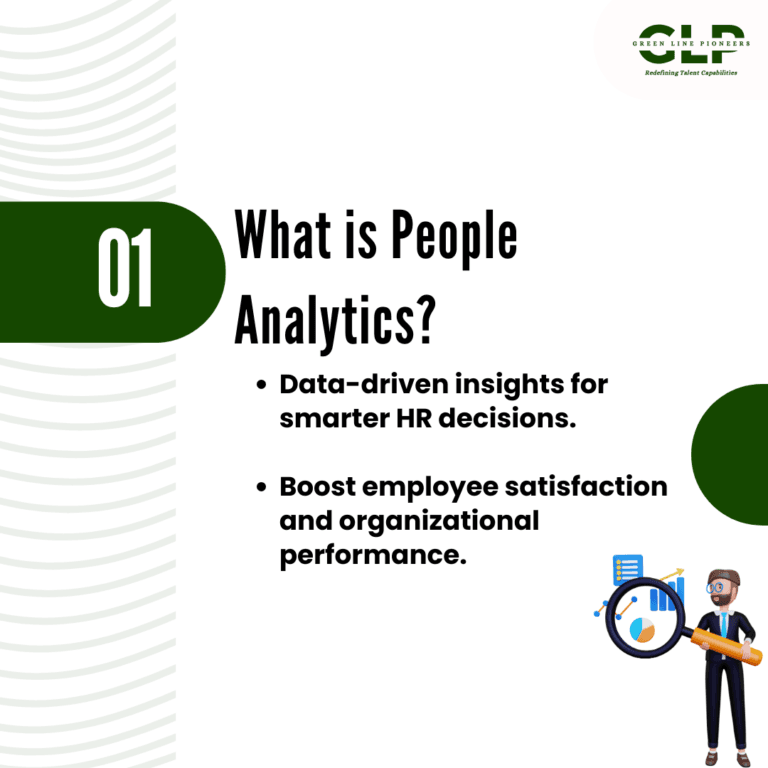
People analytics is the systematic analysis of workforce data to improve HR decisions. It involves collecting, organizing, and analyzing employee data to uncover insights that inform decisions about hiring, performance management, employee engagement, and retention.
This innovative approach empowers HR teams to shift from reactive problem-solving to proactive strategy-building, ensuring that business decisions are not just informed but transformative.
Why People Analytics Matters
The modern workplace thrives on data-driven decisions. Leveraging people analytics can result in:
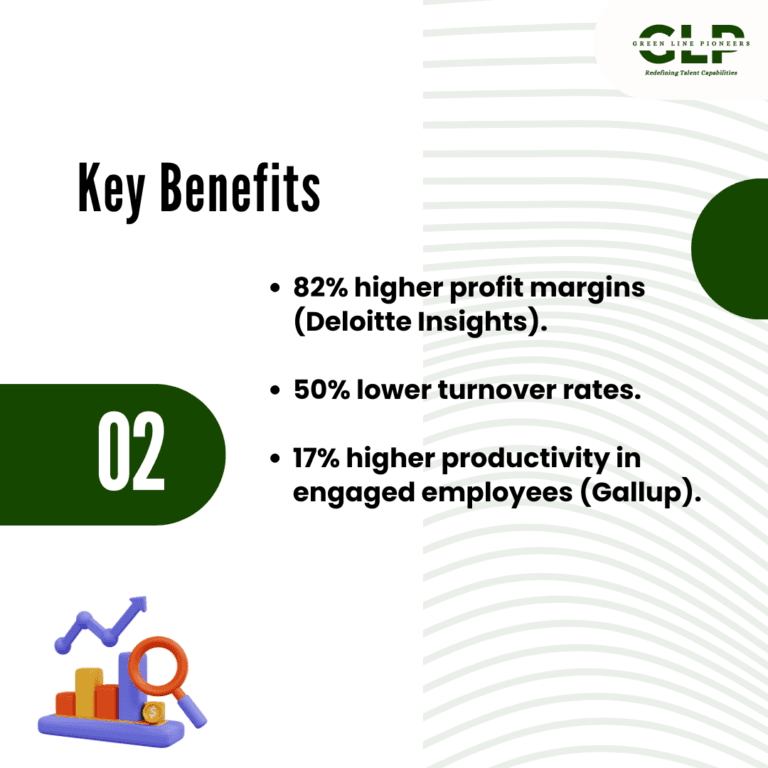
- Higher Productivity: Companies with engaged employees achieve 17% higher productivity and 21% greater profitability, according to Gallup.
- Reduced Turnover: Insights from people analytics have been shown to lower turnover rates by 50%, as highlighted by Deloitte Insights.
- Improved Hiring Accuracy: Predictive analytics boosts hiring precision by 25%, ensuring better alignment between candidates and organizational needs.
Core Benefits of People Analytics in HR
- Improved Hiring Practices
Hiring the right talent is critical. People analytics enables predictive hiring models that analyze candidate data to identify individuals most likely to excel within a specific role and culture. This data-driven approach minimizes hiring errors, reduces turnover, and enhances team cohesion.
- Enhanced Employee Performance
Through performance analytics, HR teams can track and evaluate key performance indicators (KPIs) to identify high-performing employees and areas for improvement. For example:
- A company using these insights may achieve a 15-20% improvement in employee output within months.
- Managers can tailor coaching and development plans to meet specific employee needs.
- Effective Retention Strategies
Employee turnover can be a significant cost burden. People analytics identifies patterns and factors contributing to attrition, such as workload imbalances, low engagement, or lack of growth opportunities. Businesses can then implement targeted retention strategies to:
- Enhance job satisfaction.
- Foster loyalty.
- Reduce rehiring and retraining costs.
- Increased Employee Engagement
Employee engagement is a critical driver of productivity and innovation. Analytics uncovers engagement trends and identifies interventions that resonate with employees, creating a more motivated and cohesive workforce.
- Strategic Workforce Planning
By analyzing trends in hiring, turnover, and performance, people analytics supports long-term workforce planning. Businesses can anticipate future talent needs, identify skill gaps, and ensure they are well-positioned to meet evolving industry demands.
Real-World Success Stories in People Analytics
Enhanced Talent Acquisition
A global tech company implemented predictive hiring models and saw a 35% reduction in turnover within two years. By aligning recruitment with data-driven insights, they created stronger, more effective teams.
Boosted Productivity
A retail giant utilized performance analytics to streamline their workforce management. Within six months, they reported a 20% increase in productivity and a 10% reduction in operational costs.
Retention Improvements
A financial services firm used people analytics to address high attrition rates. By identifying and addressing employee concerns, they achieved a 25% improvement in retention rates, saving millions in recruitment expenses.
How Green Line Pioneers Leverages People Analytics
At Green Line Pioneers, we specialize in empowering organizations with cutting-edge people analytics solutions. Here’s how we make a difference:
Tailored Talent Acquisition
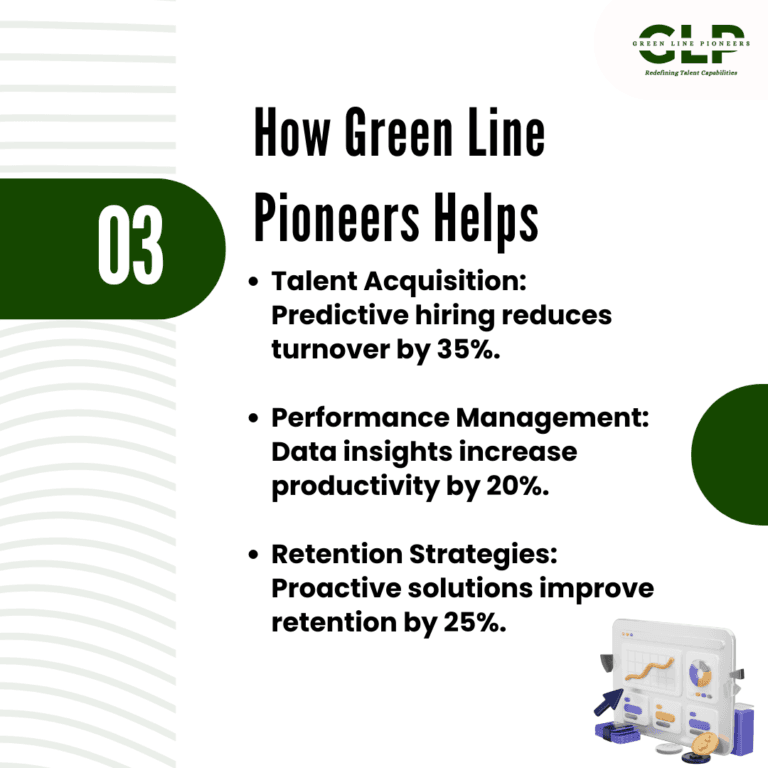
We use predictive models to identify candidates who align with your company’s goals and culture. Our tailored approach has:
- Reduced turnover by 35%.
- Enhanced team synergy and overall productivity.
Data-Driven Performance Management
By analyzing productivity trends and KPIs, we help you nurture high-performing employees. One client saw a 20% boost in team output within three months after implementing our customized performance management strategies.
Proactive Retention Strategies
Our analytics pinpoint factors driving attrition, enabling us to create actionable retention plans. For example, our solutions have:
- Improved retention rates by 25%.
- Fostered stronger employee loyalty and satisfaction.
Comprehensive HR Solutions
From engagement surveys to workforce planning tools, our end-to-end people analytics services are designed to deliver measurable results that align with your business objectives.
Why Businesses Can’t Afford to Ignore People Analytics
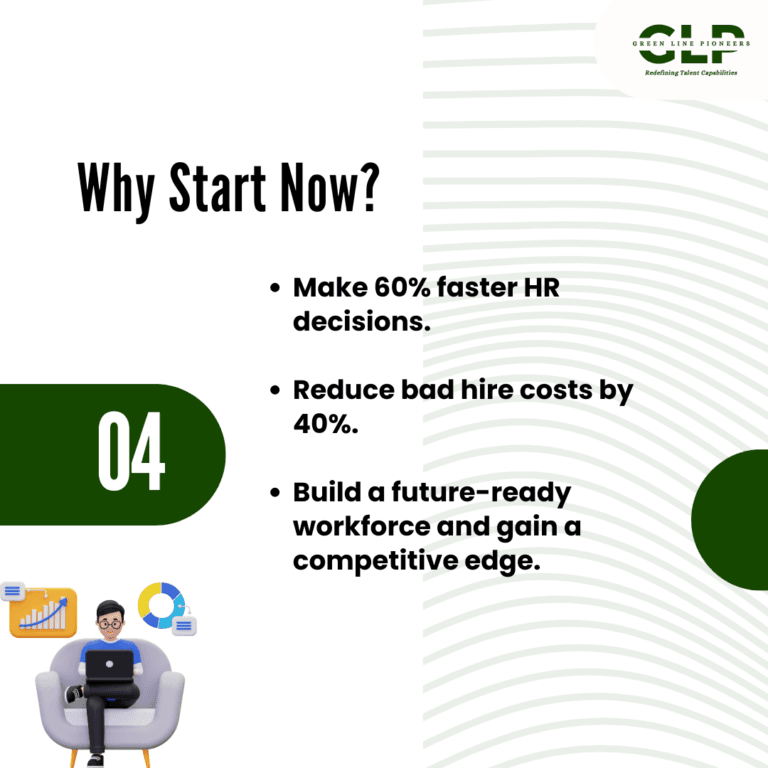
The global workforce is undergoing rapid transformation, and businesses must adapt to remain competitive. Here’s why adopting people analytics is no longer optional:
- Accelerated Decision-Making: People analytics improves decision-making speed by 60%.
- Cost Savings: Avoid costly mistakes; analytics reduces the expense of bad hires by 40%.
Innovation Leadership: Companies with robust analytics practices are 33% more likely to excel in innovation and talent development.
How to Implement People Analytics in Your Organization
- Define Your Objectives: Identify key areas where analytics can add value, such as hiring, performance management, or retention.
- Collect Quality Data: Ensure your data sources are reliable and comprehensive.
- Invest in Technology: Use advanced tools and platforms that simplify data analysis and visualization.
- Develop Analytical Expertise: Train your HR team to interpret data and create actionable insights.
Monitor and Refine: Continuously assess the impact of analytics on HR strategies and adjust as needed.
The Future of HR Is Data-Driven
As businesses increasingly recognize the power of data, the role of people analytics will continue to expand. By leveraging these insights, organizations can:
- Build stronger, more engaged teams.
- Achieve long-term workforce stability.
Drive innovation and competitive advantage.
Conclusion
People analytics is not just a trend; it is a necessity for forward-thinking businesses. By integrating data into HR strategies, organizations can make smarter, faster decisions that lead to enhanced productivity, employee satisfaction, and sustainable growth.
If you’re ready to harness the power of people analytics, Green Line Pioneers is here to guide you. Contact us today to transform your HR strategies and unlock your workforce’s full potential.

Green Line Pioneers
Redefining Talent Capabilities
Explore us on Social Media