
Moving Beyond Annual Reviews: A Practical Guide to Continuous Performance Management in the UAE
Introduction
For many organizations in the UAE, the annual performance review is a familiar ritual. However, a significant trust gap exists. Research indicates that a majority of managers and employees are skeptical of these traditional processes. This skepticism often stems from a system that feels outdated, biased, or disconnected from day-to-day work. The result? Missed opportunities for growth, disengaged teams, and stagnant performance.
At Green Line Pioneers, an HR consultancy in Dubai, we help businesses modernize their people practices. The solution lies in shifting from a once-a-year event to an ongoing, supportive dialogue known as continuous performance management. This approach builds trust, aligns goals dynamically, and drives sustainable business growth. This guide provides a practical, step-by-step path for UAE-based companies to make this essential transition.
Why Continuous Performance Management is Essential for UAE Businesses
The UAE’s competitive and fast-paced market demands agility. A rigid annual performance appraisal cycle cannot keep up with rapidly changing goals, projects, and market conditions. Continuous performance management fosters a culture of open communication, timely feedback, and regular adjustment. It turns the performance management system into a tool for development rather than just evaluation, directly addressing the trust deficit and helping retain top talent in a dynamic regional landscape.
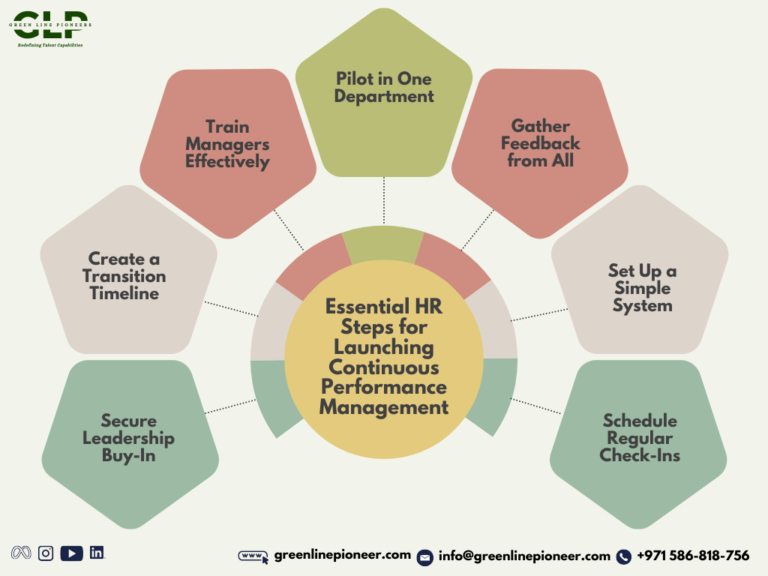
7 Practical Steps to Implement Continuous Performance Management
Here is a structured approach to replace outdated annual reviews with a system that works.
1. Secure Commitment from Leadership
Any meaningful change requires support from the top. Leadership must understand the strategic value: increased productivity, higher employee retention, and a more agile organization. Secure their commitment not just in principle, but with dedicated resources, clear communication of support to the entire company, and by aligning the new process with broader business objectives.
2. Develop a Clear Transition Plan
Abruptly abandoning the old system can create confusion. Develop a phased timeline that maps the transition over a quarter or a full year. This plan should include stages for communication, training, piloting, and full rollout. A structured plan manages expectations and demonstrates the organization’s commitment to a thoughtful, well-managed change.
3. Train Managers in Coaching and Feedback
The success of continuous management hinges on managers. They must shift from being judges to becoming coaches. Invest in training that builds skills in having constructive feedback conversations, setting effective goals, and providing supportive coaching. This training is critical for making the new process meaningful and effective for their teams.
4. Run a Pilot Program
Before a company-wide launch, test the new framework in one department or team. Choose a group with engaged leadership. This pilot phase allows you to identify practical challenges, gather initial feedback, and adjust the process. The learnings from this real-world test are invaluable for creating a system that works for your specific company culture.
5. Actively Seek and Incorporate Feedback
As you pilot and then roll out the system, consistently collect input from participants—both managers and employees. Use surveys, focus groups, or one-on-one discussions. Ask what is working, what is not, and what could be improved. This iterative feedback loop ensures the system evolves to meet user needs and increases buy-in across the organization.
6. Implement User-Friendly Tools
Complex tools can derail adoption. The goal is to facilitate conversations, not create administrative burden. Choose or develop a simple, accessible platform for tracking goals, sharing feedback, and scheduling check-ins. In the UAE context, ensure the tool is compliant with local data protection norms and accessible to a mobile, diverse workforce.
7. Establish a Rhythm of Regular Check-Ins
The core of the continuous model is replacing the annual review with frequent, informal conversations. Mandate and schedule regular one-on-one check-ins between managers and employees (e.g., weekly or bi-weekly). These meetings should focus on progress, obstacles, development, and support, not just task lists. This consistency is what ultimately builds trust and keeps performance on track.
Conclusion
Transitioning to continuous performance management is a strategic investment in your people and your company’s future. It addresses the core issues of trust and relevance that plague traditional systems. By following these structured steps, organizations in the UAE can create a more responsive, fair, and motivating environment that drives both individual and business success.
As a dedicated HR consultancy in Dubai, Green Line Pioneers partners with businesses to design and implement modern, effective performance frameworks. Our expertise can help you navigate this change smoothly and successfully.
Contact Us Today:
Email: info@greenlinepioneer.com
Phone: +971 586-818-756
Website: www.greenlinepioneer.com
FAQs: Continuous Performance Management in the UAE
Annual reviews are a retrospective, formal evaluation that happens once a year. Continuous performance management is an ongoing, forward-looking process focused on regular feedback, coaching, and goal adjustment throughout the year.
When done effectively, regular check-ins save time by preventing small issues from becoming large problems, improving clarity, and reducing the need for lengthy annual review preparations. They are typically brief, focused conversations.
Success is measured through progress on clearly defined objectives, completion of key results, qualitative feedback from peers and managers, and contributions to team goals. The focus shifts from a single rating to a holistic view of performance and development.
Yes, the principles are universal. Whether you are a startup in Dubai Internet City or a large established company in Abu Dhabi, the framework can be adapted. The implementation scale, tools, and specific check-in rhythms can be tailored to your company’s size and culture.
The continuous process provides a richer, more consistent data set for compensation decisions. Managers can base recommendations on a full year of documented conversations, goal achievements, and demonstrated competencies, rather than a single subjective rating.
Key challenges can include initial resistance from managers accustomed to old systems, ensuring consistency across diverse and multilingual teams, and selecting the right technology platform that complies with UAE regulations.

Green Line Pioneers
Redefining Talent Capabilities
Explore us on Social Media