
Beyond Skills: Why Emotional Intelligence Should Be a Top Hiring Criteria
Introduction
When hiring new employees, most companies focus on hard skills and experience. But is that enough? Research suggests that emotional intelligence (EI) plays a crucial role in professional success, teamwork, and leadership. While technical skills can be taught, EI is the game-changer that differentiates top performers from the rest.
In this blog, we’ll explore why emotional intelligence should be a top priority in hiring, its key traits, and how HR professionals can integrate EI into their hiring process.
The Power of Emotional Intelligence in the Workplace
What is Emotional Intelligence?
Emotional intelligence (EI) is the ability to recognize, understand, and manage your emotions while also being aware of and influencing the emotions of others. It directly impacts workplace relationships, collaboration, and leadership effectiveness.
Why Emotional Intelligence Matters in Hiring
Companies that prioritize EI in their hiring strategy benefit from employees who:
- Excel in teamwork and leadership
- Handle stress effectively
- Adapt to changes seamlessly
- Foster a positive work culture
The Data Behind Emotional Intelligence
The impact of EI on workplace success is backed by data:
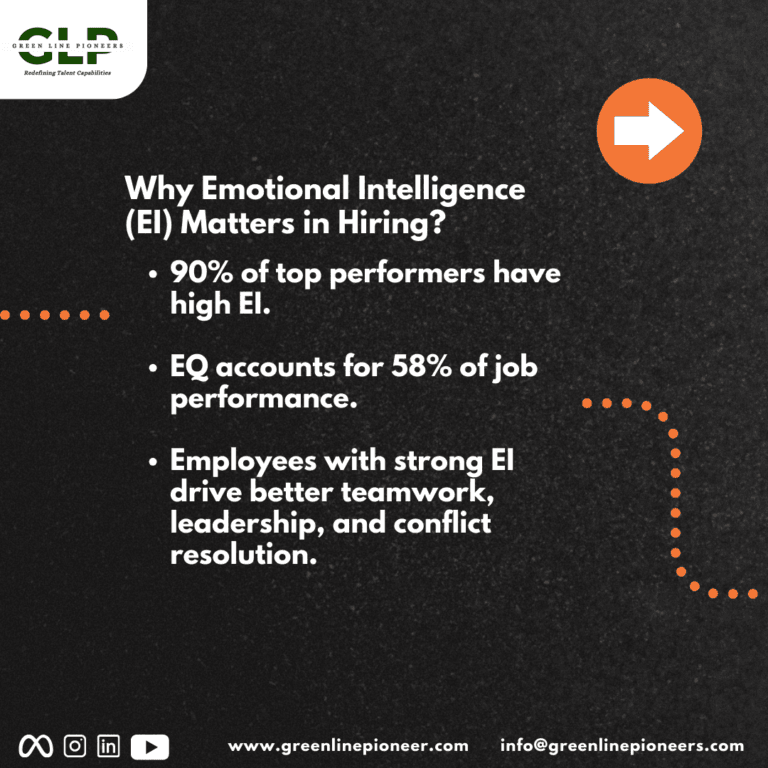
- 90% of top performers have high emotional intelligence.
- 58% of professional success is attributed to emotional intelligence.
- Employees with strong EI make better decisions and build stronger professional relationships.
Key Emotional Intelligence Traits to Look for in Candidates
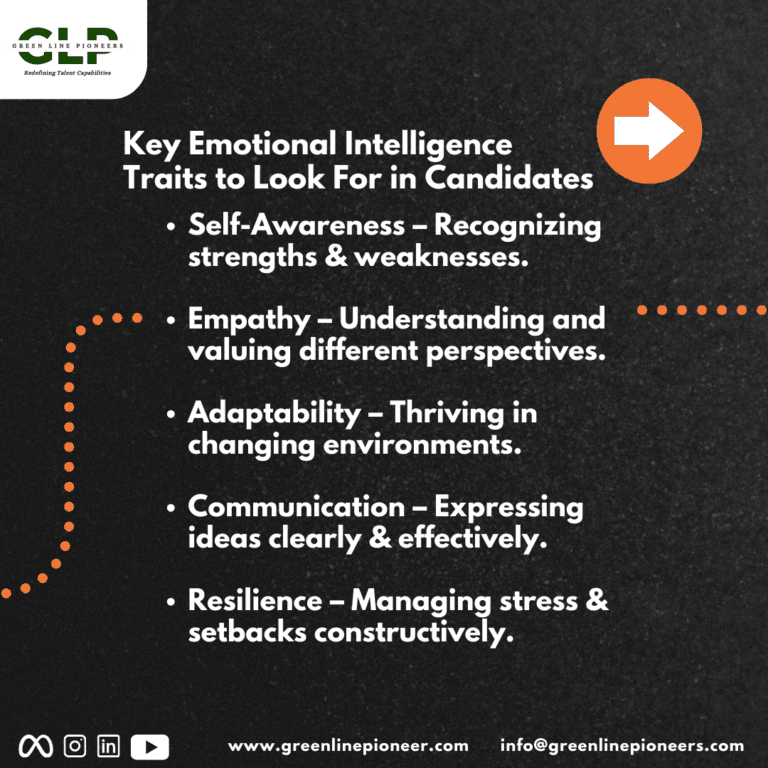
Self-Awareness
- Can the candidate recognize their strengths and weaknesses?
- Do they accept constructive criticism and strive for improvement
Empathy
- Do they understand and connect with others on an emotional level?
- Can they put themselves in another person’s shoes?
Adaptability
- How well do they navigate uncertainty and change?
- Are they open to learning new skills and processes?
Communication Skills
- Are they clear, constructive, and open in conversations?
- Can they effectively articulate ideas and listen actively?
Resilience
- How do they handle pressure and setbacks?
Can they maintain a positive attitude during challenges?
How HR Can Integrate Emotional Intelligence into Hiring
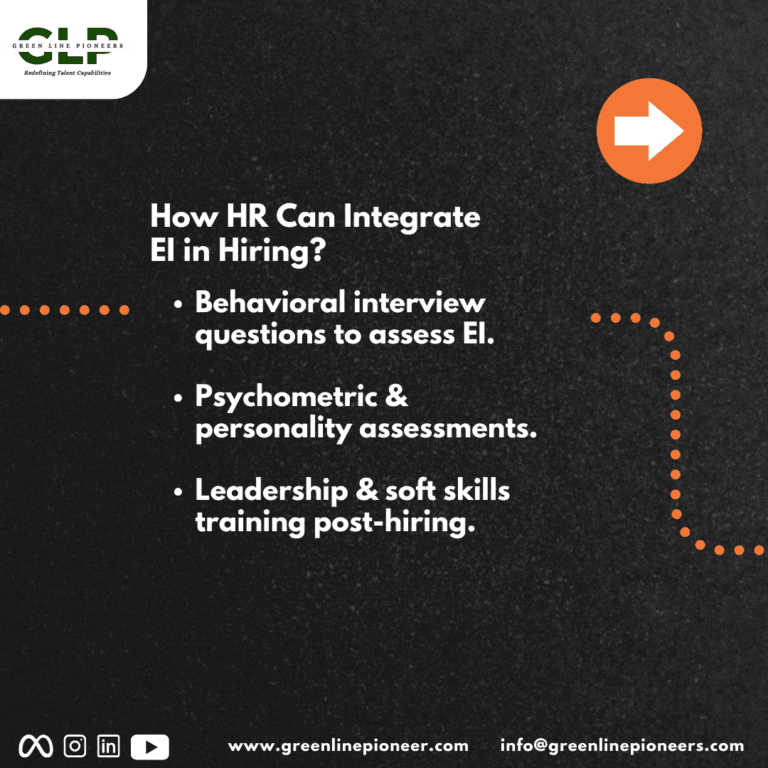
Use Behavioral Interview Questions
Instead of just assessing technical expertise, ask candidates situational questions to gauge their EI:
- “Tell me about a time you had to handle a difficult colleague. How did you manage the situation?”
- “How do you respond to critical feedback?”
Incorporate Psychometric & Personality Assessments
These tests help measure emotional intelligence traits such as empathy, adaptability, and self-awareness. Common assessments include:
- EQ-i 2.0 (Emotional Quotient Inventory)
- The Mayer-Salovey-Caruso Emotional Intelligence Test (MSCEIT)
Prioritize Soft Skills in Job Descriptions
Clearly mention the importance of soft skills like teamwork, leadership, and adaptability in job postings.
Provide Leadership & Soft Skills Training Post-Hiring
Even if candidates have strong EI, continuous development is crucial. Companies should invest in:
- Emotional intelligence training
- Leadership development programs
- Conflict resolution workshops
Building an Emotionally Intelligent Workforce with Green Line Pioneers
At Green Line Pioneers, we understand that hiring the right talent goes beyond technical skills. We help businesses build resilient, high-performing teams by integrating emotional intelligence into hiring strategies.
Ready to Strengthen Your Workforce?
Contact us today to develop hiring strategies that focus on both skills and emotional intelligence for a stronger, more resilient workforce.
Conclusion
Hard skills can be taught, but emotional intelligence is the key to long-term success. By incorporating EI into hiring strategies, companies can create a workforce that is more adaptable, collaborative, and productive. Prioritizing EI isn’t just an HR trend—it’s a business necessity.
FAQs
Can emotional intelligence be learned and improved?
Yes! While some individuals naturally have higher EI, it can be developed through self-awareness, mindfulness, and professional training.
How can small businesses assess EI in candidates?
Small businesses can use behavioral interviews, reference checks, and personality assessments to gauge a candidate’s emotional intelligence.
Is emotional intelligence more important than IQ?
While IQ is crucial for technical tasks, EI is often more valuable in workplace interactions, leadership, and teamwork.
Can emotional intelligence predict job performance?
Studies show that employees with high EI tend to excel in leadership, teamwork, and decision-making, making it a strong predictor of job success.
How does emotional intelligence affect workplace culture?
A workforce with high EI fosters a positive, collaborative, and stress-resilient work environment, improving overall productivity and employee satisfaction.

Green Line Pioneers
Redefining Talent Capabilities
Explore us on Social Media