
A Practical Guide to Modern Recruitment: 5 Strategies for Better Hiring in the UAE
Hiring has become one of the most critical business functions today, especially in a fast-moving market like the United Arab Emirates. According to Forbes Advisor data, 46 percent of HR leaders identify recruitment as their top priority, while 36 percent report lacking the resources to secure the right talent.
At the same time, the expectations of candidates have shifted. Job seekers in Dubai, Abu Dhabi, and across the UAE are more informed, more selective, and more sensitive to hiring experiences. This combination has made traditional, reactive hiring approaches less effective.
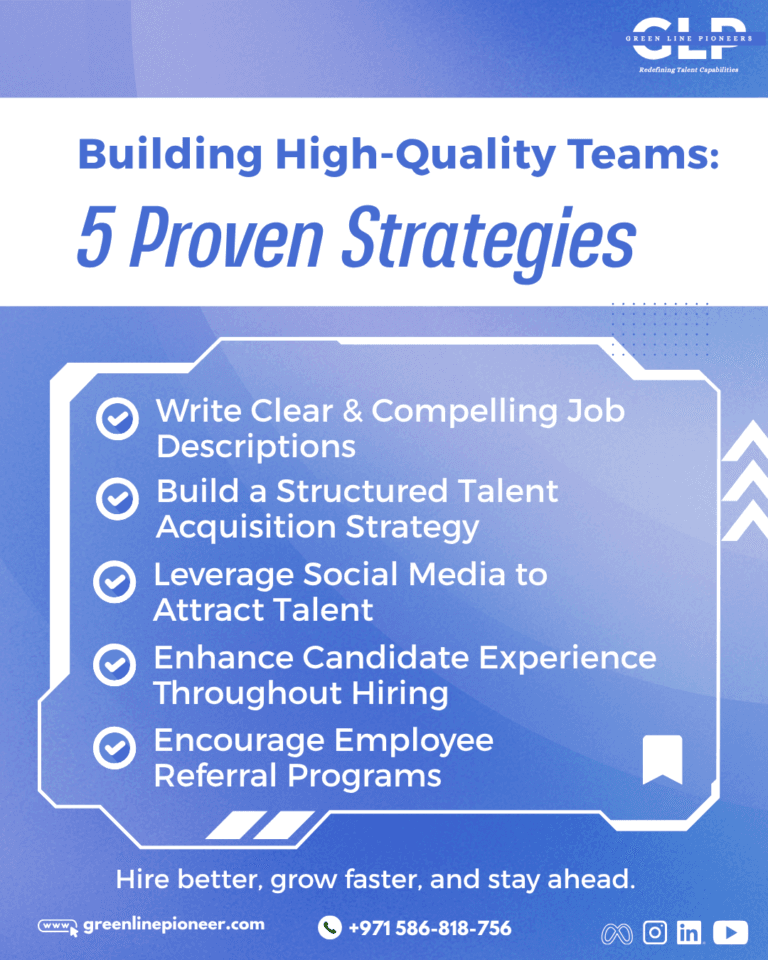
Organizations that perform well in hiring are not necessarily doing more. They are doing a few things consistently and with clarity. Below are five strategies supported by data and industry insights that help improve hiring outcomes for companies facing recruitment challenges in UAE.
- Clear Job Descriptions Drive Better Candidate Fit
The hiring process often breaks down at the very first step. When job descriptions are vague or overloaded with unnecessary requirements, they attract the wrong candidates and discourage the right ones. Research shows that 75 percent of candidates respond more positively to job descriptions that use clear and straightforward language.
Well-written job descriptions serve two purposes. They define expectations for candidates and reduce inefficiencies for hiring teams. When clarity improves, the volume of irrelevant applications drops, and screening becomes more focused.
Organizations that take time to define role requirements based on actual performance data tend to see stronger alignment between hiring decisions and long-term employee success. This is particularly critical in the UAE’s competitive sectors like finance, technology, and logistics. For a seamless process, companies often rely on a structured talent acquisition strategy to get this foundational step right.
- A Structured Hiring Approach Improves Consistency
Many organizations still rely on reactive hiring, where roles are filled as needs arise without a consistent framework. This often leads to rushed decisions and inconsistent candidate evaluation.
Data indicates that companies that use structured and skills-based hiring methods are more likely to make successful hiring decisions. Nearly 40 percent of hiring managers now prioritize skills over job titles, and those using skills-based approaches are about 60 percent more likely to hire the right candidate.
A structured approach includes clearly defined evaluation criteria, standardized interview processes, and measurable hiring metrics. It also allows organizations to compare candidates more objectively and reduce reliance on instinct alone. For businesses in the UAE, adopting a structured recruitment process ensures compliance with local labor laws and improves the overall quality of new hires.
- Social Media Expands Access to Talent in the UAE
The way candidates search for jobs has changed significantly. Candidates no longer rely only on job portals like Bayt or LinkedIn. They actively research companies, explore employer branding, and engage with content before applying.
Around 71 percent of candidates research a company before submitting an application. This shift makes social media an important recruitment channel. It allows organizations to communicate their work culture, values, and expectations in a more visible and ongoing manner.
Companies that actively use social platforms are better positioned to reach passive candidates, who are often more experienced and selective. This expands the talent pool beyond those actively applying. In the UAE, where expatriate talent is constantly evaluating opportunities, a strong social media presence is a key part of modern employer branding in Dubai.
- Candidate Experience Directly Impacts Hiring Success
Candidate experience is no longer a secondary factor. It has become a key differentiator in competitive hiring markets. Data shows that 60 percent of job seekers are dissatisfied with lengthy or complex hiring processes. Additionally, 76 percent of candidates report frustration when they do not receive feedback after interviews.
These numbers highlight a clear pattern. Candidates expect timely communication, transparency, and respect throughout the process. Organizations that streamline application steps, communicate clearly, and provide feedback tend to see higher acceptance rates and stronger employer perception.
Candidate experience is not only about hiring one individual. It influences how future candidates view the organization. In a connected market like the UAE, a negative review on Glassdoor or social media can directly impact your ability to attract top talent. Improving the candidate experience management process is a direct solution to this problem.
- Employee Referrals Improve Quality of Hire
Employee referrals remain one of the most reliable sources of high-quality hires. Referred candidates often have a better understanding of the organization and are more likely to align with its culture.
While referral data varies across industries, consistent patterns show that referred candidates tend to have higher retention rates and faster onboarding outcomes. In contrast, poor hiring decisions can be costly. The average cost per hire can reach up to 4700 dollars, and in some cases, total costs can rise significantly due to lost productivity and rehiring needs.
Referral programs reduce these risks by bringing in candidates who are pre-vetted informally through existing employees. For companies in the UAE looking to reduce turnover, building a formal employee referral program is one of the most cost-effective solutions available.
- Employee Referrals Improve Quality of Hire
Employee referrals remain one of the most reliable sources of high-quality hires. Referred candidates often have a better understanding of the organization and are more likely to align with its culture.
While referral data varies across industries, consistent patterns show that referred candidates tend to have higher retention rates and faster onboarding outcomes. In contrast, poor hiring decisions can be costly. The average cost per hire can reach up to 4700 dollars, and in some cases, total costs can rise significantly due to lost productivity and rehiring needs.
Referral programs reduce these risks by bringing in candidates who are pre-vetted informally through existing employees. For companies in the UAE looking to reduce turnover, building a formal employee referral program is one of the most cost-effective solutions available.
Final Thoughts for UAE Businesses
Recruitment today is no longer about filling open roles quickly. It is about building a consistent and reliable approach that leads to better hiring decisions over time. Clear communication, structured processes, thoughtful use of channels, and attention to candidate experience are not new ideas. What has changed is their importance.
Organizations that focus on these fundamentals and support them with data are more likely to build teams that perform well and stay longer. The right hiring approach is not defined by how fast positions are filled, but by how well those decisions hold up over time.
If your organization is struggling with any of these areas, partnering with experts who understand the local market is a practical next step. A professional talent acquisition agency can help you implement these five strategies without the overhead of building internal systems from scratch.
Contact Green Line Pioneers today. Let us help you build a team that is truly ready for the future.
Green Line Pioneers – Your Partner in Strategic HR Consultancy in the UAE
Phone: +971 586-818-756
Email: info@greenlinepioneer.com
Website: www.greenlinepioneer.com
Frequently Asked Questions (FAQs): Team Management in the UAE
The most common challenge is finding qualified passive candidates who are already employed. The UAE market has a high concentration of experienced professionals, but many are not actively applying. A structured sourcing and employer branding strategy is required to reach them.
Focus on two strategies first: writing very clear job descriptions and implementing a simple employee referral program. These require low cost but deliver high impact. Once those are stable, you can consider outsourcing to a recruitment process outsourcing provider.
Poor candidate experience during the hiring process is a leading cause. Long gaps in communication, unclear next steps, or a lack of feedback during interviews often lead candidates to accept competing offers. Speed and transparency are critical.
UAE labor law requires clear contract terms, defined working hours, and specific end-of-service benefits. Your structured hiring approach must include compliance checks during the offer stage. A qualified talent acquisition consultant can help navigate these legal requirements.
Beyond time-to-hire and cost-per-hire, track quality-of-hire (performance ratings after 6 months), first-year retention rates, and candidate satisfaction scores. These metrics provide a complete picture of your recruitment health.
Yes. While academic credentials are valued, many companies are shifting to skills-based assessments and practical tests. This is fully legal as long as it does not conflict with specific role requirements defined by regulatory bodies like DHA for healthcare or DIFC for finance.
Passive candidates are best reached through social media engagement and professional networking on platforms like LinkedIn. Sharing insights about your work culture and projects attracts attention. Many companies also work with a specialized talent acquisition firm to access pre-vetted passive candidate networks.

Green Line Pioneers
Redefining Talent Capabilities
Explore us on Social Media