
Talent Acquisition and Recruitment: Understanding the Strategic Difference
In the world of hiring, the terms “recruitment” and “talent acquisition” are often used as if they mean the same thing. However, conflating these two distinct functions is a strategic misstep. While both are essential to building a team, they serve different purposes and operate on entirely different timelines. Understanding the difference between talent acquisition and recruitment is not about semantics; it is a fundamental aspect of building a resilient and successful organization.
This article will clarify what sets these functions apart and explain why a strategic approach is necessary for long-term business health.
What is Recruitment? The Focus on Immediate Needs
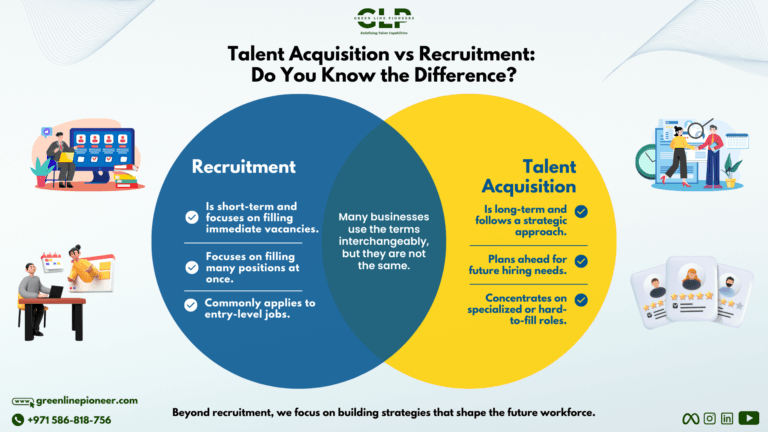
Recruitment is a linear, reactive process. Its primary objective is to fill open positions as they become available. Think of it as a short-term solution to a pressing need.
Key Characteristics of Recruitment:
- Short-Term Focus: The cycle begins with a job opening and ends when that position is filled. The urgency is to minimize disruption to daily operations.
- Volume and Efficiency: This approach is often used for high-volume hiring, seasonal roles, or entry-level positions where a standard set of qualifications exists.
- Process-Oriented: Recruitment follows a defined path: identify a vacancy, source candidates, screen applications, interview, and make an offer. The emphasis is on speed and efficiency within this pipeline.
- Transactional Nature: The relationship is often a straightforward transaction—a candidate has the required skills, and the company has an immediate need.
In essence, recruitment is vital. It ensures a business has the necessary personnel to function today. However, relying on it exclusively is a limited strategy.
What is Talent Acquisition? The Long-Term Strategy
Talent acquisition (TA) is an ongoing, strategic function. It is a holistic approach that looks beyond the current quarter, focusing on finding and nurturing individuals who will drive the company forward for years to come.
Key Characteristics of Talent Acquisition:
- Long-Term and Proactive: TA is continuous, not reactive. It involves building relationships with potential candidates long before a specific role is open, creating a robust talent pipeline.
- Strategic Alignment: This function is deeply tied to the company’s broader business objectives, growth plans, and long-term vision. It asks, “What skills and leaders will we need in two or five years to achieve our goals?”
- Focus on Specialized Roles: Talent acquisition is critical for securing individuals for specialized, senior, or hard-to-fill positions that require a unique blend of skills and experience.
- Relationship-Based: Instead of a transaction, TA is about building lasting connections. It involves employer branding, engaging with passive candidates, and creating an experience that makes top professionals want to join your organization.
Talent acquisition is an investment in the future human capital of the company, ensuring it has the right people to navigate future challenges and opportunities.
Why the Distinction Matters for Your Business
The choice between a purely recruitment-focused model and a blended approach that includes talent acquisition has significant consequences.
Companies that only practice recruitment may successfully fill vacancies quickly. However, this approach can lead to higher long-term costs due to increased turnover, a less engaged workforce, and a lack of strategic alignment in hiring. You may fill a seat today but miss the person who could have transformed the department tomorrow.
Conversely, organizations that embrace a talent acquisition strategy position themselves for sustained success. They build a reputation as a destination for top talent, reduce time-to-hire for critical roles through established pipelines, and make hires that contribute directly to long-term business objectives. They are not just filling a position; they are investing in a person who will add value for years.
The goal for modern businesses is not to choose one over the other but to integrate both effectively. A strong hiring strategy requires the efficiency of recruitment to manage immediate operational needs and the foresight of talent acquisition to secure the leaders and innovators of the future.
Finding the Right Balance for Sustainable Growth
A successful people strategy requires both a reactive ability to fill urgent openings and a proactive plan to build the team you will need tomorrow. It is about aligning your hiring practices with your company’s immediate operational demands and its future vision.
At Green Line Pioneers, we work with organizations to develop this balanced approach. We help design systems that manage efficient recruitment for volume hiring while building the strategic talent acquisition frameworks necessary for securing specialized professionals and leadership talent.
Does your current hiring strategy address both your immediate needs and your long-term vision? Evaluating this balance is the first step toward building a stronger, more adaptable workforce.

Green Line Pioneers
Redefining Talent Capabilities
Explore us on Social Media