
Beyond Guesswork: How to Measure Employee Engagement with 5 Practical HR Methods
Employee engagement isn’t just a feel-good metric. It’s the invisible engine driving productivity, fueling retention, and shaping your entire workplace environment. When employees feel genuinely connected to their work and organization, remarkable things happen. But how do you know if your team is truly engaged? Relying on intuition or occasional watercooler chats isn’t enough. Effective measurement provides the concrete insights leaders need to make informed decisions and foster a thriving culture.
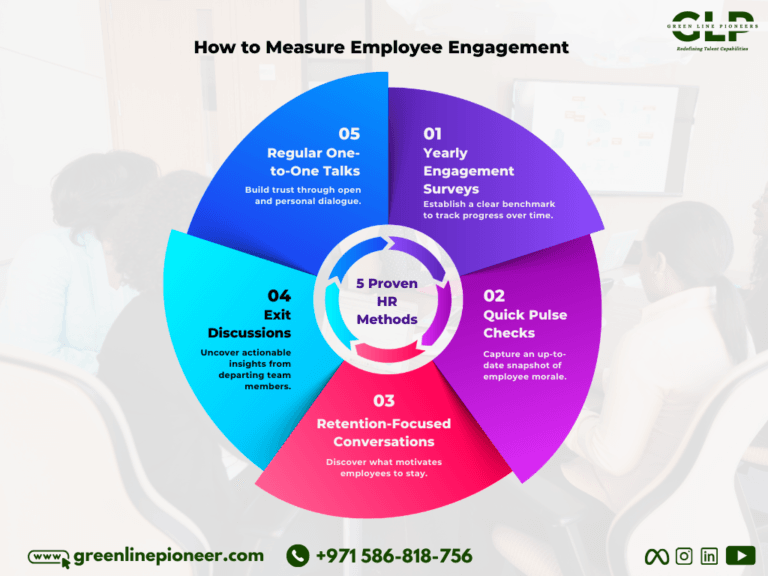
Here are 5 proven HR methods to accurately gauge your team’s engagement:
The Comprehensive Yearly Engagement Survey: Your Benchmark Builder
- What it is: A thorough, structured questionnaire typically deployed annually.
- Why it works: It establishes a critical baseline. By asking consistent questions year after year, you track progress, identify long-term trends, and pinpoint areas needing sustained attention. Cover key areas like satisfaction, alignment with company values, perceptions of leadership, growth opportunities, and resources.
- Action Tip: Ensure anonymity to encourage honesty. Share results transparently (even the challenging ones) and, crucially, communicate a clear action plan based on the findings. This builds trust and shows employees their voices matter.
Quick Pulse Surveys: Capturing the Real-Time Mood
- What it is: Short, frequent surveys (e.g., monthly or quarterly) focused on 2-5 specific questions.
- Why it works: Annual surveys are vital, but workplace dynamics change quickly. Pulse surveys offer an up-to-date snapshot of morale and engagement levels. They’re perfect for checking sentiment after major changes (like a new policy launch or restructuring) or focusing on specific themes (e.g., communication effectiveness, team collaboration).
- Action Tip: Keep them incredibly brief and focused. Rotate questions to cover different areas over time. Act quickly on the feedback to demonstrate responsiveness.
Stay Interviews: Understanding Why People Choose to Stay
- What it is: Proactive, structured conversations between managers and current, valued employees to understand their motivations, satisfaction, and concerns.
- Why it works: Instead of waiting for problems to surface (or for exit interviews), stay interviews uncover what truly motivates your best people. They reveal what’s working well, what could be improved from the employee’s perspective, and potential flight risks before someone decides to leave.
- Action Tip: Train managers to conduct these conversations effectively (listening more than talking). Ask open-ended questions: “What do you look forward to most when you come to work?” “What might tempt you to consider another opportunity?” “How can we make your role even better?”
Exit Interviews: Learning from Departing Talent
- What it is: Structured interviews (often conducted by HR) with employees who are leaving the organization.
- Why it works: While you can’t retain everyone, departing employees often provide candid feedback about their experiences. This uncovers specific pain points, management issues, or cultural disconnects that might be driving turnover and harming engagement for others.
- Action Tip: Ensure interviews are conducted neutrally (ideally by HR, not the direct manager). Assure confidentiality to get honest answers. Systematically analyze exit data for recurring themes and integrate findings into retention and engagement strategies.
Consistent One-on-One Meetings: Building Trust Through Dialogue
- What it is: Regular, scheduled conversations between employees and their direct managers.
- Why it works: This isn’t just about project updates. Effective 1:1s create a safe space for ongoing, personalized dialogue. They build trust, allow managers to sense engagement levels individually, address concerns early, and discuss career aspirations. The quality and consistency of these meetings are often a direct reflection of engagement.
- Action Tip: Encourage managers to dedicate significant time in 1:1s to the employee’s well-being, challenges, and goals, not just task lists. Active listening and follow-through on discussions are essential.
The Impact of Getting It Right
Consider this compelling insight: While the global average for employee engagement hovered around a concerning 21% in 2024, organizations dedicated to implementing these measurement best practices and acting on the results achieve dramatically higher levels – as high as 70%. (Source: Gallup Research). This stark difference highlights the tangible benefits of moving beyond assumptions and actively listening to your workforce.
Moving from Insight to Action
Measuring employee engagement isn’t an end point; it’s the crucial starting line. These five methods provide the rich, multi-faceted data leaders need. The true value lies in what you do with that information:
- Analyze & Understand: Look for patterns, strengths, and critical areas for improvement.
- Communicate Transparently: Share findings (the good and the challenging) with employees.
- Collaborate on Solutions: Involve employees and managers in developing action plans.
- Implement & Track: Put changes into practice and monitor their impact over time.
Partnering for a Thriving Workplace
At Green Line Pioneers, we understand that building a highly engaged workforce requires strategy and commitment. We partner with organizations to design and implement tailored approaches that foster genuine connection, motivation, and sustained high performance. By accurately measuring engagement and translating insights into meaningful action, you create a workplace where people feel valued and contribute their best.
Ready to understand your true engagement levels and build a more committed team? Let’s talk.

Green Line Pioneers
Redefining Talent Capabilities
Explore us on Social Media