
Redefining Sustainable HR: Why Courageous Boundaries Are Your Secret Weapon
For too long, HR professionals have been caught in an impossible bind: champions of both employee well-being and organizational strategy, yet often expected to be perpetually available, absorb blame, and fix systemic problems with individual band-aids. This unsustainable model leads to burnout, erodes trust, and ultimately diminishes HR’s strategic impact. The solution? Courageous Boundaries. This isn’t about building walls; it’s about building a foundation for truly sustainable and effective HR.
Here’s how boundaries redefine sustainable HR:
Beyond Burnout: Why Boundaries Are Non-Negotiable for Modern HR
The traditional “always-on,” sacrificial HR model is broken. Without clear boundaries, HR professionals become depleted, reactive, and unable to drive the strategic value organizations desperately need. Sustainable HR isn’t a buzzword; it’s a fundamental shift requiring the courage to define limits. These boundaries protect HR’s capacity, integrity, and ultimately, their ability to create healthier, more effective workplaces.
The Pillars of Boundary-Centric Sustainable HR
Reclaiming Time & Presence: The Fuel for Strategic Impact
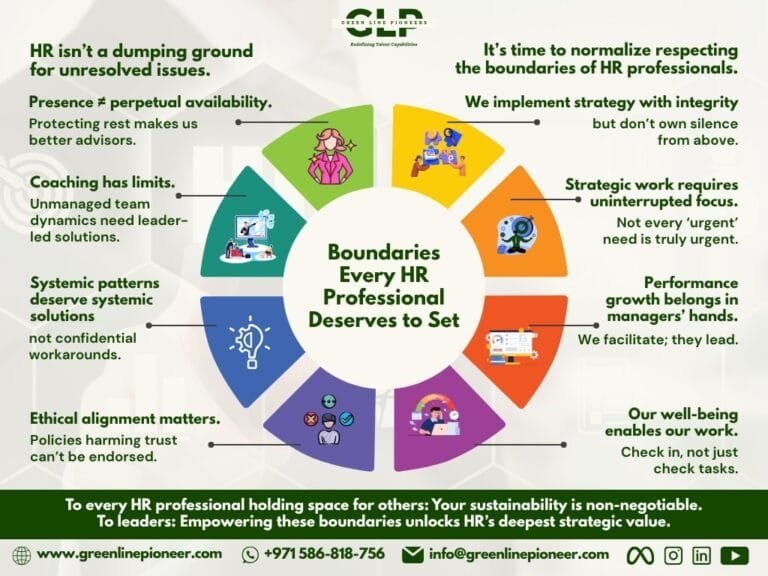
- Protected Focus Time: Strategic HR work – analyzing trends, designing impactful programs, future-proofing the workforce – requires deep, uninterrupted thought. Sustainable HR demands carving out and fiercely guarding dedicated time blocks for this high-value work. Constant reactivity is the enemy of strategy.
- Intentional Recharging: Non-stop availability is a recipe for burnout. HR professionals must model healthy work-life integration. Truly disconnecting after hours, taking breaks, and utilizing vacation time isn’t optional; it’s essential for long-term capacity and clear-headed decision-making. An exhausted HR team cannot effectively support an entire organization’s well-being.
Upholding Ethical Stewardship: The Core of Trust
- Refusing the Blame Shield: HR implements strategy; it doesn’t create it in a vacuum. Sustainable HR requires the courage to clarify that HR executes leadership decisions. They should not be positioned to absorb employee frustration stemming from choices made elsewhere. Taking ownership for HR’s own actions is crucial; becoming a scapegoat for broader leadership decisions erodes credibility.
- Ethical Policy Gatekeeping: HR must be the ethical compass. Endorsing or implementing policies or directives known to be harmful, discriminatory, or fundamentally unfair erodes employee trust in HR and the organization irreparably. Saying “no” to unethical demands is a critical boundary protecting the organization’s integrity and HR’s role.
Enforcing Shared Accountability: HR as Facilitator, Not Fixer
- Empowering People Managers: Performance management, feedback, and career development conversations are core managerial responsibilities. Sustainable HR means shifting from owning these conversations to enabling managers to conduct them effectively through training, coaching, and providing tools. HR cannot be a crutch for managerial avoidance.
- Confronting Systemic Issues: Individual coaching or confidential “fixes” are insufficient bandaids for deep-rooted, systemic problems (e.g., toxic team dynamics, inequitable processes, structural inefficiencies). Sustainable HR requires the boundary to push back on quick individual fixes and insist on collaborative, systemic solutions involving leadership. Band-aids avoid necessary, larger-scale change.
Prioritizing Collective Well-being: Starting with HR
- HR Well-being is Foundational: An unhealthy, depleted HR function cannot foster organizational health. Sustainable HR necessitates proactive check-ins on the HR team’s own well-being, workload, and capacity. Protecting the team’s sustainability is the first step in safeguarding the organization’s people strategy.
- Authority Matches Responsibility: HR is often tasked with “fixing” dysfunctional teams or leaders but lacks the positional authority or organizational mandate to enact real change. Sustainable HR requires clear boundaries: either grant HR the necessary influence and authority to address these issues effectively, or redefine the responsibility to sit squarely with the accountable leaders. You can’t hold HR responsible for outcomes they lack the power to drive.
The Transformative Power of “No”
- Strategic Declination: Saying “no” to non-strategic tasks, redundant processes, or requests that fall outside HR’s core mandate or capacity isn’t rejection; it’s strategic prioritization. This boundary protects HR’s time and energy for high-impact work that truly partners with the business.
- Limits of Coaching: While coaching is powerful, it has boundaries. Unmanaged conflict between employees, especially involving power imbalances or deep-seated issues, requires direct leader intervention and accountability. Sustainable HR knows when to facilitate leader-led resolution instead of absorbing the conflict themselves.
The Path Forward: A Call for Courageous Partnership
- For Organizational Leaders: Truly unlock HR’s strategic value by actively empowering and respecting their boundaries. Support their protected time, back their ethical stances, clarify ownership (especially for manager responsibilities), and grant the authority needed to match their responsibilities. Recognize that boundaries enable HR to be a stronger, more effective partner.
- For HR Professionals: Embracing and protecting boundaries is not weakness or shirking responsibility; it’s the ultimate act of professional stewardship. It honors your role, preserves your capacity for meaningful impact, and models the healthy practices you advocate for others. Have the courage to define and uphold your limits.
Boundaries: The Catalyst for Healthier Workplaces
Courageous boundaries are the cornerstone of truly sustainable HR. They transform HR from a perpetually reactive, burnout-prone function into a strategic, trusted, and resilient partner capable of driving long-term organizational health and success. By reclaiming time, upholding ethics, enforcing accountability, and prioritizing their own well-being, HR professionals can finally operate from a place of strength and sustainability.
Which of these boundary challenges resonates most deeply with your HR experience? What’s the first boundary you need to courageously set or support?

Green Line Pioneers
Redefining Talent Capabilities
Explore us on Social Media