
The Future of HR is AI-Powered: Transforming Talent Management with Intelligent Technology
The Human Resources (HR) landscape is undergoing a seismic shift. As workplaces evolve at breakneck speed, HR professionals are turning to Artificial Intelligence (AI) to streamline operations, enhance decision-making, and create personalized employee experiences. From automating mundane tasks to predicting workforce trends, AI is redefining HR as a strategic partner in business success.
In this blog, we explore the AI technologies reshaping HR, their real-world applications, and why embracing AI is no longer optional for forward-thinking organizations.
The AI Revolution in HR: From Administrative to Strategic
Gone are the days when HR was synonymous with paperwork and payroll. Today, HR teams leverage AI to:
- Automate repetitive tasks (e.g., resume screening, policy updates).
- Analyze vast datasets to predict turnover, skill gaps, and hiring needs.
- Deliver personalized employee experiences through AI-driven tools.
By 2025, the global HR tech market is projected to reach $38 billion, with AI adoption at the forefront. Let’s dive into the technologies driving this transformation.
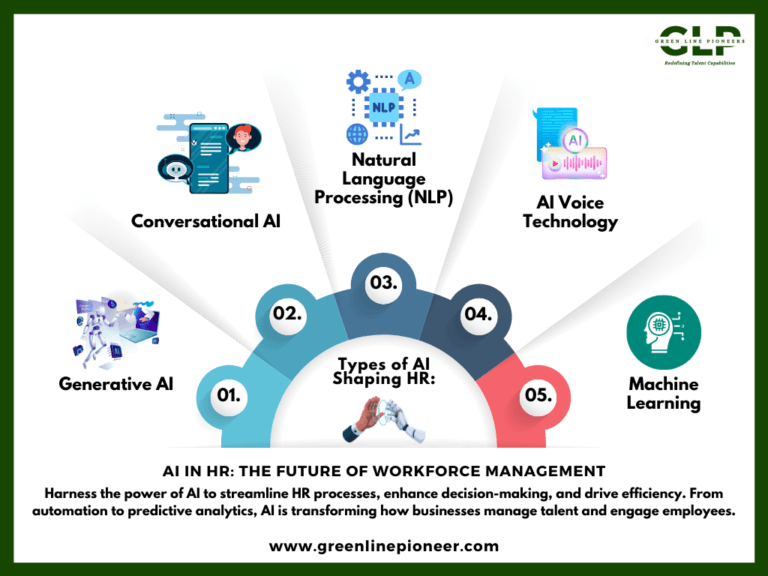
7 AI Technologies Reshaping HR (With Real-World Examples)
- Generative AI: Automating Content Creation
What it does: Generates job descriptions, HR policies, and reports using tools like ChatGPT.
HR Application:
- Drafting inclusive job postings in minutes.
- Updating employee handbooks to reflect regulatory changes.
Example: Unilever uses generative AI to create tailored onboarding materials for global teams.
- Conversational AI: Enhancing Employee Support
What it does: Powers chatbots like Mya or Olivia (Paradox) for 24/7 employee queries.
HR Application:
- Answering FAQs about benefits, leave policies, or payroll.
- Guiding candidates through application processes.
Benefit: Reduces HR ticket volume by up to 40%.
- AI Voice Technology: Streamlining Voice-Based Interactions
What it does: Enables voice-activated HR assistants via tools like Amazon Alexa for HR.
HR Application:
- Conducting hands-free surveys during factory shifts.
- Assisting visually impaired employees with policy navigation.
- Machine Learning: Predicting Workforce Trends
What it does: Analyzes historical data to forecast turnover, hiring needs, and skill gaps.
HR Application:
- IBM’s Watson predicts employee flight risks with 95% accuracy.
- Identifying high-potential employees for leadership programs.
- Natural Language Processing (NLP): Optimizing Recruitment
What it does: Scans resumes and assesses candidate sentiment in interviews.
HR Application:
- HireVue’s NLP tools evaluate video interviews for cultural fit.
- Reducing unconscious bias in resume screening.
- Automation AI: Eliminating Manual Workflows
What it does: Streamlines onboarding, payroll, and compliance via platforms like Workday.
HR Application:
- Auto-filling employee tax forms.
- Triggering reminders for performance reviews.
- AI Agents: Enhancing Decision-Making
What it does: Provides HR teams with real-time analytics dashboards.
HR Application:
- Monitoring employee engagement trends.
Recommending L&D programs based on skill gaps.
Why AI is Non-Negotiable for Modern HR Teams
Boosted Efficiency
AI handles up to 65% of repetitive tasks, freeing HR teams to focus on culture-building and strategy.
Data-Driven Hiring
Companies using AI in recruitment report a 35% increase in quality hires
Personalized Employee Journeys
AI tailors learning paths (e.g., Coursera recommendations) and career development plans.
Proactive Workforce Planning
Predictive analytics help HR anticipate turnover, enabling preemptive retention strategies.
Challenges to Consider When Implementing AI in HR
While AI offers immense potential, HR leaders must navigate:
- Data Privacy: Ensuring GDPR/CCPA compliance when handling employee data.
- Bias Risks: Auditing AI tools for discriminatory patterns in hiring or promotions.
- Change Management: Training employees to collaborate with AI systems.
Pro Tip: Start with pilot programs (e.g., an AI chatbot for IT support) before scaling.
The Future of AI in HR: What’s Next?
Emerging trends to watch:
- Metaverse Integration: Virtual reality onboarding and training.
- Emotion AI: Tools like Affectiva analyzing employee well-being through voice/text.
- Blockchain for HR: Secure, decentralized employee records.
Conclusion: Embrace AI or Risk Falling Behind
AI isn’t replacing HR professionals—it’s empowering them to become architects of employee success. By automating workflows, uncovering insights, and fostering inclusivity, AI positions HR as a driver of innovation.
Ready to transform your HR strategy? Start by auditing workflows that consume the most time (e.g., recruitment, payroll) and explore AI tools tailored to your needs.

Green Line Pioneers
Redefining Talent Capabilities
Explore us on Social Media